Genießen Sie kostenlosen Standardversand bei allen Bestellungen über 50 €.


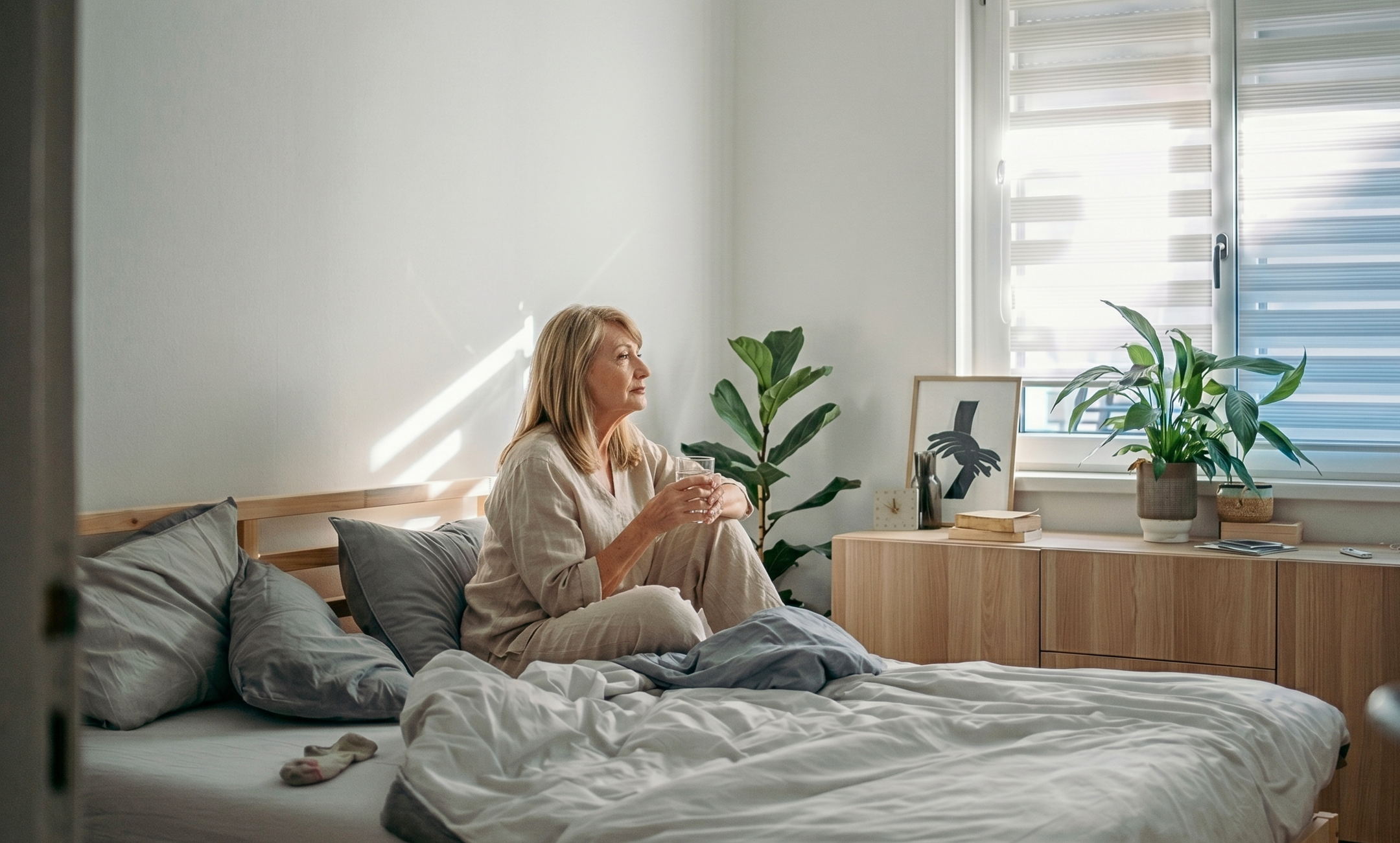
The body keeps changing. So do you.
There’s a moment many of us don’t expect during menopause.
It isn’t a hot flash.
It isn’t a sleepless night.
It’s the moment you realize you don’t quite feel like yourself anymore.
Maybe it happens while you're getting dressed. You pull on something you've worn a hundred times before, but suddenly it doesn't feel right.
Maybe it happens when you turn down plans you would have said yes to a few years ago.
Or maybe it happens when you catch yourself thinking, When did I become this tired?
Not because you've changed overnight.
But because the changes have been happening for so long that one day you stop and realize how much has shifted.
And that can be surprisingly hard.
When your body starts feeling unfamiliar
Most of us expect menopause to bring physical changes.
What catches many of us off guard is how personal those changes can feel.
Your body doesn't respond the way it used to.
Your energy isn't as predictable.
Some days you feel completely like yourself. Other days you don't.
And after a while, it can start to feel like you're living with a body that keeps changing the rules.
That uncertainty wears on you.
Not because every symptom is severe, but because you're constantly adjusting.
Constantly checking in.
Constantly wondering what kind of day you're going to have.
It's exhausting in a way that's difficult to explain to anyone who hasn't lived it.
It's not just your body that feels different
This is the part many people don't talk about.
When your body changes, your relationship with yourself can change too.
You start second-guessing things you never used to think about.
You wonder whether you'll have enough energy.
You hesitate before committing to plans.
You feel less certain in situations that once felt easy.
Little things add up.
And over time, it can start to feel like you've lost touch with the woman you used to know so well.
Not because she's gone.
Because you're still trying to figure out who you are in the middle of all these changes.

The pressure to get your old self back
Many of us spend a lot of time trying to get back to who we were before menopause.
Back before the disrupted sleep.
Back before the hormonal shifts.
Back before everything felt so unpredictable.
It's understandable.
We miss feeling familiar to ourselves.
But sometimes that pressure creates its own frustration.
Because every change starts feeling like something that needs to be fixed.
Every difficult day feels like proof that we're moving further away from ourselves.
And that's a heavy thing to carry.
Feeling like yourself again happens slowly
The women I know who seem most at peace with this stage of life didn't wake up one day feeling completely different.
It happened gradually.
They stopped measuring themselves against who they used to be.
They stopped treating every change as a problem.
And they started paying attention to what was still there.
Their sense of humor.
Their resilience.
Their relationships.
Their ability to adapt.
Little by little, trust started coming back.
Not because their bodies stopped changing.
Because they stopped seeing every change as a sign that something was wrong.
And that's an important distinction.
When your body needs less of your attention
One of the hardest parts of hormonal change is how much attention it demands.
When you're uncomfortable, tired, or dealing with symptoms that seem to show up uninvited, it's difficult to focus on anything else.
That's why support matters.
Not because it turns back the clock.
Because it helps create a little more space for everything beyond the symptoms.
For many women, vaginal dryness is one of those lingering issues that quietly affects comfort, confidence, and intimacy.
HydraHer is a natural, hormone-free supplement designed to support vaginal hydration, comfort, intimacy, and overall well-being. By helping support moisture and hormonal balance naturally, it can help women feel more comfortable in their bodies and less distracted by the symptoms demanding their attention.
And when your body needs less of your attention, you have more energy to give to the rest of your life.

You are still becoming yourself
One of the most comforting realizations about this stage of life is that you don't have to become the woman you were ten years ago.
You don't have to reclaim every part of your younger self.
You don't have to prove that nothing has changed.
Things have changed.
That's true.
But change and loss aren't always the same thing.
Sometimes what feels like losing yourself is really the process of getting to know yourself again.
A version of you with different priorities, different needs.
Still you.
Just not the same you.
And that's okay.
The goal was never to go backwards.
It's learning how to feel at home in yourself again.
